How to Build a Scalable Medical Device OEM Service Organization
A practical framework for aligning capacity, coverage, and capability for your installed base.
Reading time: approximately 12 minutes
Congratulations. Your installed base is growing. Now service has to keep up.
Sales has opened three new markets. Installations are scheduled. Customers expect responsive local support. Your team still has preventive maintenance to complete, existing accounts to support, and only so many hours in the week.
Do you hire ahead of demand and carry the cost, stretch the team and risk falling behind, or risk losing your technicians?
More technicians may be part of the answer. But headcount is not a service strategy.
For medical device original equipment manufacturers (OEMs), a scalable service organization combines internal expertise, qualified service partners, and connected support operations to meet changing demand. The design must account for workload, geography, technical qualifications, and the infrastructure required to deliver a consistent customer experience.
The framework has three steps:
What Should a Scalable Service Model Deliver for the OEM?
A service model earns its place by helping the OEM meet customer commitments, use technical expertise effectively, and adapt as demand changes. Evaluate its value across three outcomes:
This is the business case for an integrated approach: qualified execution supported by the coordination, technical resources, and oversight needed to sustain it. A service partner’s value should be demonstrated across that operating model.
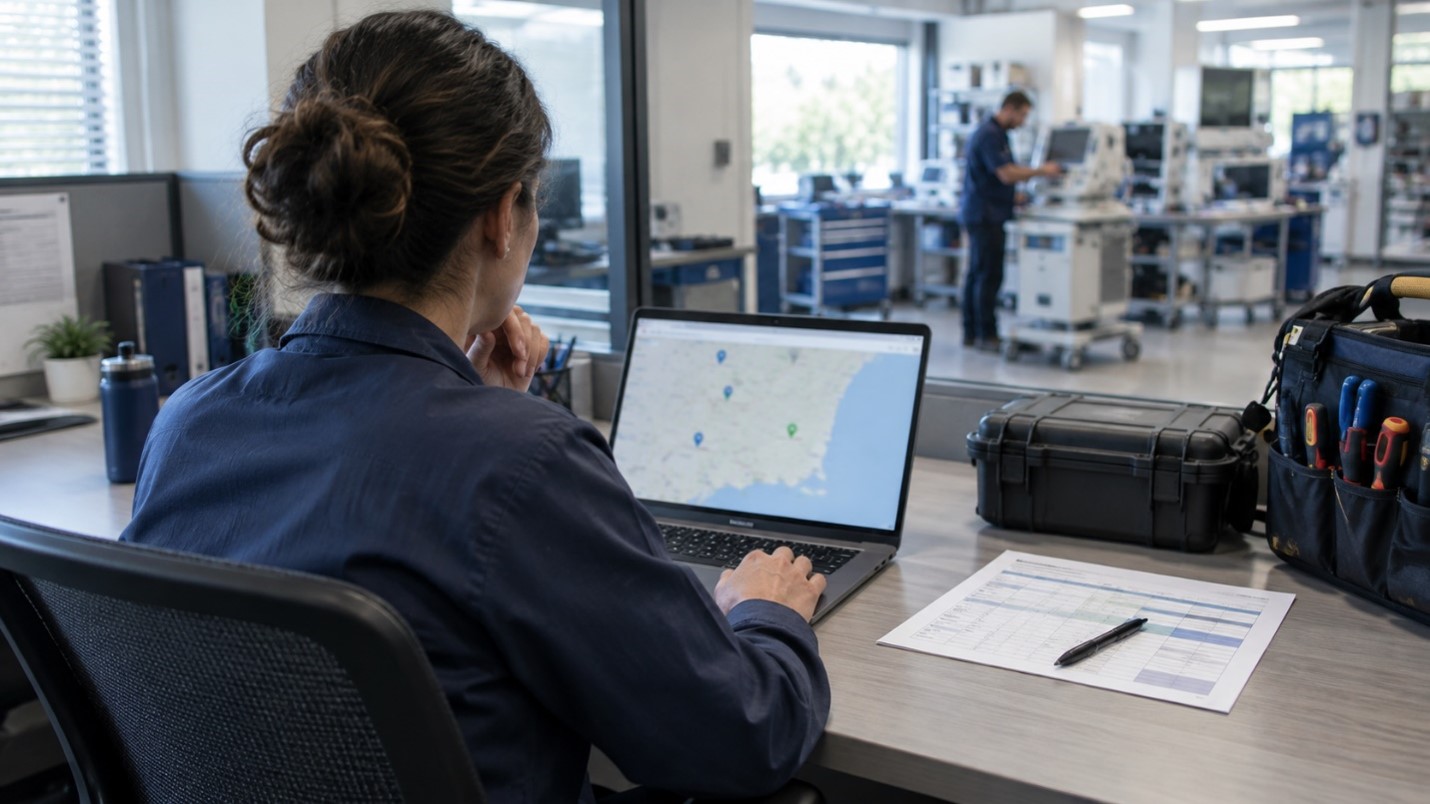
1. Map the Demand: What Service Capacity Do You Actually Need?
OEM service capacity planning starts with the workload required to support the installed base. Equipment counts help establish the picture, but they cannot tell you how many technicians you need on their own.
Two OEMs with the same number of systems may need very different service organizations. One supports equipment concentrated in metropolitan areas. Another has customers spread across smaller markets, with long drives between sites and demanding response commitments.
Assess demand in three dimensions:
A territory with relatively few service events may still need local coverage. Sending an engineer from another region might satisfy the annual workload calculation while making the response commitment impossible to meet.
Count the Hours Behind the Service Visit
Estimate workload hours, including travel and documentation, then compare them with available technician hours after training, leave, and other commitments. Examine peak periods separately from annual averages.
The staffing spreadsheet, of course, assumes nobody takes vacation during an installation or becomes ill. Real capacity planning needs room for that vacation, an unexpected escalation, and two installations landing in the same week. A calendar with no room for variation is a coverage risk waiting for a service call.
Before adding resources, identify where work actually waits. A backlog caused by unavailable parts or incomplete triage requires a different response from a backlog caused by insufficient qualified labor.
Turn the installed-base map into a workload map. For each territory, connect equipment locations with expected service activity, travel, and required qualifications. Then separate recurring demand from peaks that need additional capacity.
That exercise can reveal different constraints inside the same backlog: insufficient hours, excessive distance between sites, or too few people qualified for a particular procedure. Identify the constraint before selecting the resource.
Plan Across the Product Lifecycle
Geographic expansion is only one source of demand. A mature installed base may need a maintenance campaign, a field corrective action, or continued support while internal specialists concentrate on a new product launch.
Segment demand by product, territory, task, and lifecycle stage. That makes it easier to distinguish a recurring need from a temporary surge and to assign each activity to appropriately qualified resources.
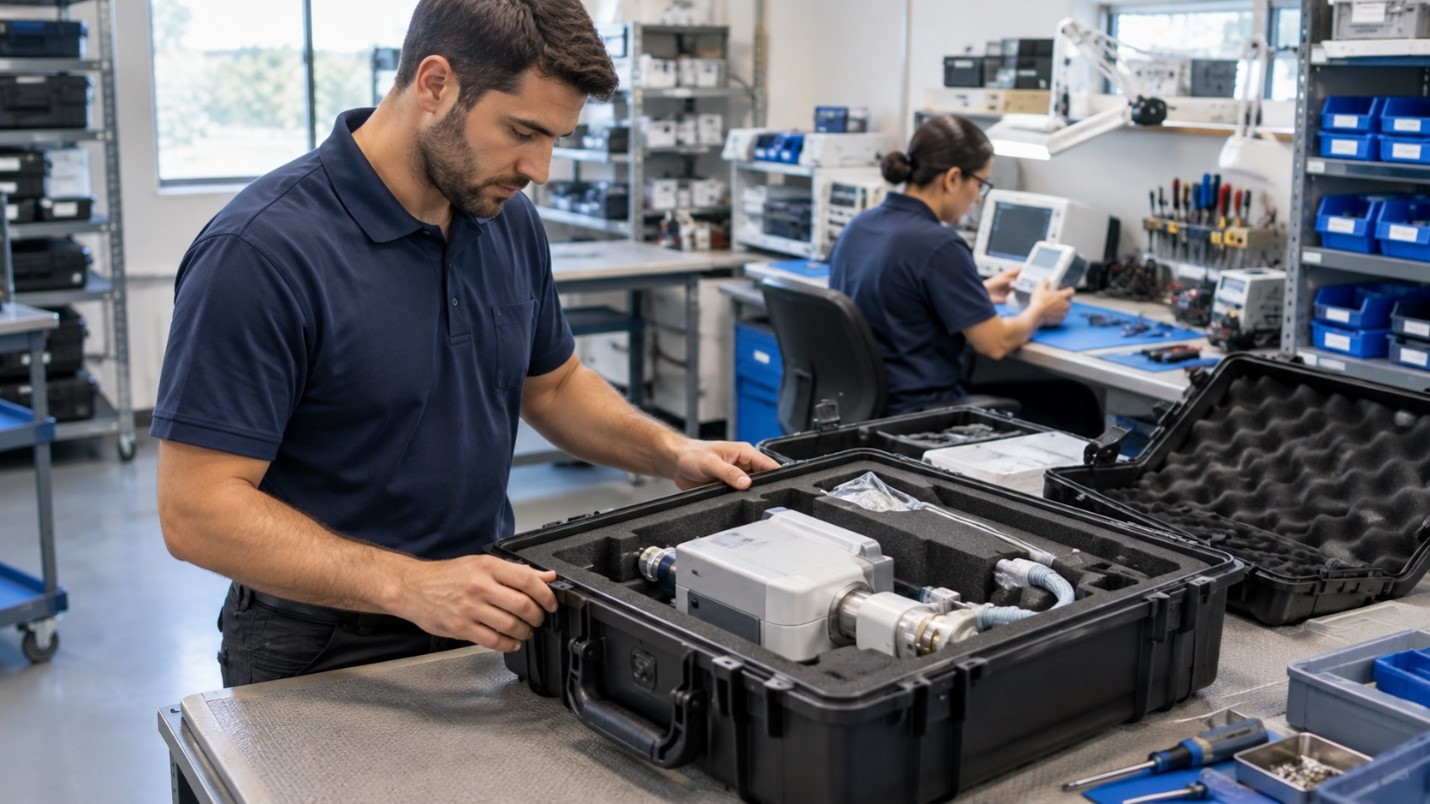
2. Build the Right Capacity: When Should You Hire or Use a Service Partner?
Add internal headcount when sustained qualified workload, technical requirements, and customer needs justify a dedicated role. Use qualified service partners where agreed coverage or workload can be supported effectively alongside your internal team. Many OEMs will need a combination, or hybrid solution.
The decision starts with the work you need performed and the expertise you need to retain.
Internal technicians may provide technical leadership, support strategic accounts, and connect field experience with product engineering. Qualified partners can support defined installations, preventive maintenance, corrective maintenance, and regional coverage.
| Service Resource | Where It Can Add Value | What to Establish |
|---|---|---|
| Internal field service | Sustained territory demand, technical leadership, and strategic accounts | Sustainable workload, required expertise, and backup coverage |
| Qualified service partners | Regional coverage, recurring maintenance, installation projects, and workload fluctuations | Product and task authorization, availability, and accountability |
| Remote technical support | Intake, troubleshooting, dispatch preparation, and escalation | Triage procedures, technical access, and clear handoffs |
| Depot repair | Equipment, components, and assemblies suited to off-site service | Approved procedures, turnaround expectations, and logistics |
Assign work according to demonstrated competence and OEM authorization.
Determine which responsibilities need sustained internal ownership, including technical strategy, strategic-account relationships, and coordination with engineering. Then examine the work surrounding those responsibilities.
A task may require product-specific training and careful documentation without requiring the specialist who manages your most complex escalations. Assigning that work to other qualified resources can protect specialist availability. Revisit the mix as territory density, product requirements, and demand change.
Use Fractional Capacity for a Defined Portion of the Work
A fractional service model uses qualified partner resources to support part of the OEM’s workload without creating a dedicated internal position for every requirement.
Consider an illustrative example: an aesthetic-equipment manufacturer expands across several states. Demand requires regional support, but does not yet justify an engineer in each state. A partner provides agreed coverage while the OEM evaluates how each territory develops.
As demand grows, the manufacturer may hire internal engineers in denser markets and retain partner support for adjacent territories, maintenance, or installation peaks. The combined model can remain a long-term operating choice.
Fractional capacity still requires an agreed scope, qualified resources, scheduling expectations, and response commitments. Work segmentation can also protect internal expertise. Quest’s published executive brief on Teladoc Health’s tiered service model describes separating scheduled routine maintenance from advanced technical support to preserve senior technical capacity.
Compare the Full Operating Model
A salary and an hourly service rate are incomplete comparisons. Evaluate the full cost and responsibility of delivering the required coverage under each model.
Ask three questions:
The best fit depends on the requirement. A low labor rate loses its appeal quickly if your service manager becomes the dispatch desk, parts coordinator, and escalation owner for every visit.
Build the cost comparison around three categories:
Use the same workload and response expectations for both options, and identify the costs your team will continue to carry. A quoted rate may include dispatch and reporting, or leave both with the OEM. The commercial proposal and responsibility model should tell the same story.
Connect Field Service With Remote Support, Depot Repair, and Parts
A scalable service organization directs each issue to the appropriate resource. Remote troubleshooting can clarify whether a visit is needed and what the technician should bring. Depot repair can support equipment or assemblies suited to off-site work. Parts readiness determines whether either approach can meet the customer’s timeline.
For equipment designed and approved for modular replacement, a technician may exchange an assembly while the removed unit returns to a depot for evaluation and repair. That workflow needs clear handoffs among technical support, dispatch, inventory, field service, and repair operations.
Before hiring, ask whether better coordination could release capacity you already have. An additional engineer cannot resolve a delay caused by a part that never shipped.
Evaluate the Infrastructure Behind the Technician
Ask a prospective partner to walk through a representative service event, from request to resolution. Who checks technician authorization, prepares parts and tools, and supports the visit when the initial plan changes?
Then test the exceptions: an unavailable technician, an incomplete installation, or a customer reporting the same symptom after the visit. Confirm who coordinates the response and what information the OEM receives.
That discussion reveals more than a coverage map alone. The operating infrastructure has value when it reduces the coordination your team must perform while preserving the visibility your OEM needs.
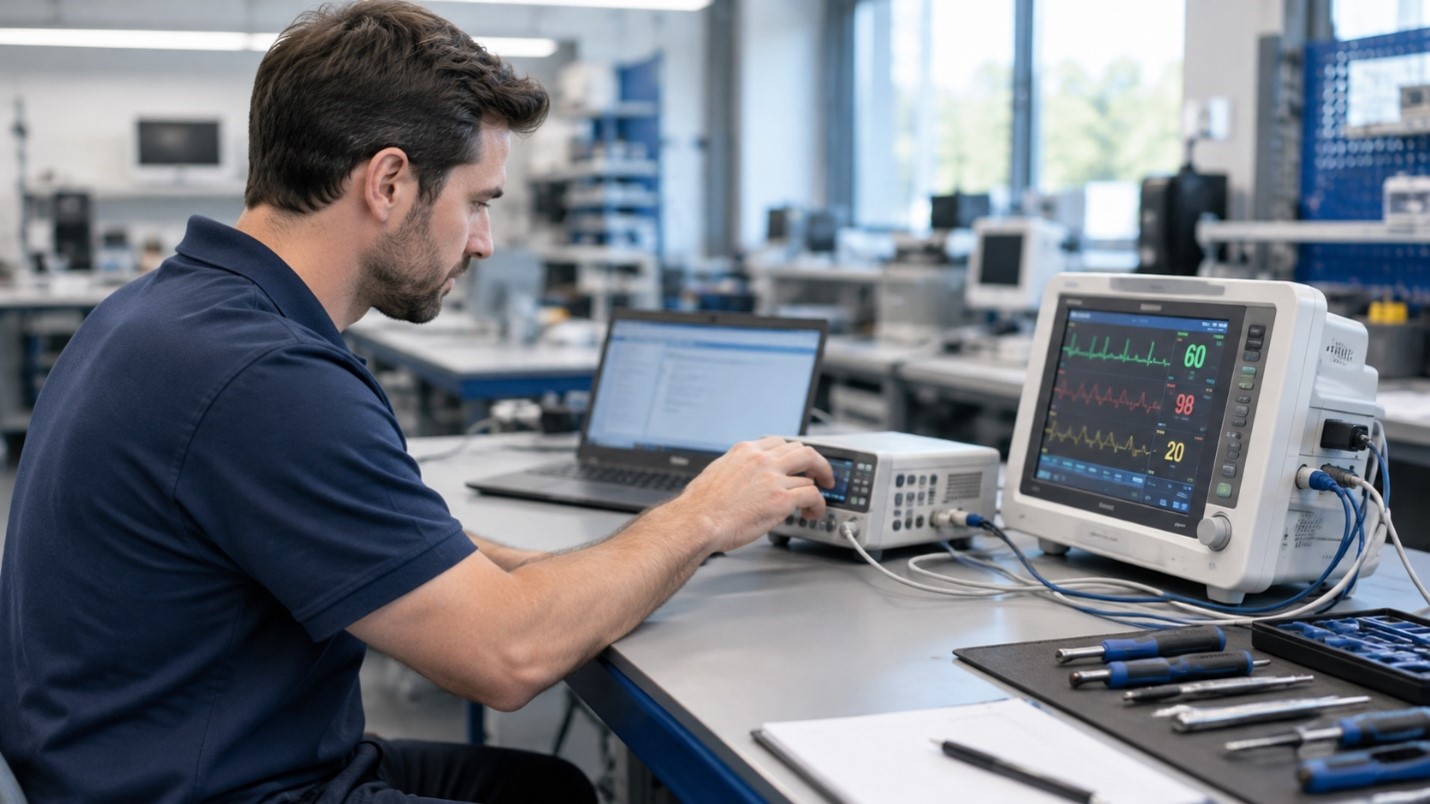
3. Maintain the Standard: How Do You Preserve OEM Control?
Trust is essential in any partnership, especially in regulated medical device vendor relationships. OEM control depends on clear technical requirements, assigned responsibilities, and visibility into service delivery. Establish those controls across internal teams and authorized partners before expanding the network.
Customers experience your brand through the person at their site, the update they receive, and whether the equipment returns to service as expected. The operating model needs to connect all three.
Qualify the Person for the Product and Task
Define who can perform which procedures, on which products, and under what conditions. Installation, preventive maintenance, calibration, and complex troubleshooting may require different qualifications.
Initial training establishes a starting point. Product changes, firmware updates, revised procedures, and recurring field issues may require additional instruction. Agree on who communicates updates, verifies readiness, and restricts assignments when qualifications are incomplete.
Technicians also need controlled access to current service documentation, appropriate tools and test equipment, and technical support. Dispatch should follow those authorizations.
Assign Ownership Through Resolution
Discuss and agree on who makes technical decisions, approves additional work, communicates delays, and coordinates the next step when the first visit does not resolve the issue.
Set expectations for how technicians represent the OEM, communicate with customers, and document their work. A partner should operate as an extension of your service organization, with responsibilities your team and the partner can both explain.
We’ve all seen it: the work order is closed, yet the customer calls back Monday because the issue remains unresolved.
Closure needs to mean more than a completed form. Establish how unresolved issues are tracked, who confirms the next action, and how recurring failures reach the appropriate technical and quality teams.
Measure Outcomes and Investigate the Causes
Review performance across three areas:
Define the measures consistently, including what counts as resolution and how repeat visits are tracked. Then investigate the reasons behind the results.
A repeat visit may reflect a training gap, an incorrect part, incomplete triage, or a product issue. Each requires a different corrective response.
Program management connects those findings to action. Someone must own commitments, coordinate improvements, and verify that changes reach the people performing the work.
Put the Framework to Work in One Territory
Start with a territory or product line where service pressure is visible. Review recent work orders alongside upcoming installations and maintenance requirements, then ask:
Use the answers to define a specific change, its owner, and the measure that will show whether it worked. That might be additional regional coverage, a different maintenance assignment, or a better parts handoff.
Test the change against actual service outcomes before extending it across the network. Revisit the design as installed-base density, product requirements, and demand change.
Frequently Asked Questions About Scaling OEM Service
Is there a standard technician-to-equipment ratio for medical device OEMs?
There is no universal ratio. Staffing depends on service frequency, labor hours, travel, response commitments, technical qualifications, and backup needs. Installed-unit count is only one planning input, not a complete staffing model. Drawing on service-mapping experience across industries and medical devices, Quest can recommend an approach based on proven models.
When should an OEM add an internal field service engineer?
Add an internal engineer when recurring qualified workload, coverage commitments, or strategic technical needs justify the role. First confirm that technician availability is the constraint, and account for training, leave, travel, and backup coverage.
Can an OEM use service partners while retaining control?
Yes. An OEM can retain authority over procedures, qualifications, escalation rules, and performance expectations while a partner performs agreed activities. Clear responsibilities, current service records, and visibility into unresolved issues make that control operational.
Build a Service Organization Your Growth Can Rely On
A scalable service organization gives growth somewhere to go. It aligns the resources customers need with the qualifications and operating support required to deliver consistently.
Quest International supports medical device OEMs through field service, depot repair, technical support, and logistics. Engagements can address defined workload or coverage requirements within the OEM’s service organization.
Where is your current model under the most pressure: capacity, coverage, or capability?
Talk with Quest International about your service requirements to explore where additional support could strengthen your operation and how it would work within your requirements.
Map the demand. Build the right capacity. Maintain the standard.
MAR-XXX REV 1.0