
Depot Repair Strategy for MedTech OEMs | Controlled Medical Device Repair
July 14, 2026
Reading time: 7 minutes
Article Summary: A strong depot repair strategy gives MedTech OEMs a controlled way to receive returned devices, diagnose failures, repair or refurbish units, validate quality, document the work, and redeploy products with clear visibility. The best depot programs connect repair execution to reverse logistics, parts planning, customer communication, quality records, and field service intelligence.
Depot repair becomes visible when it fails
Depot repair is a service operating system, not a bench repair function. The bench matters, but the work that determines whether a depot program succeeds happens before the unit hits the bench and after it leaves: intake detail, triage rules, parts position, test validation, customer visibility, and the repair data that can support OEM quality, manufacturing, engineering, and service improvement teams.
Most OEMs only see the depot when it breaks. A unit comes back, the issue is confirmed, the work gets done, the record is clean, and the product returns to service. Quiet success. But when depot repair stalls, the whole service organization feels it. Customer care starts chasing status. Field service waits on exchange units. Quality asks for cleaner failure data. Aging RMAs pile up. Sales hear about downtime from the accounts that are supposed to be the reference customers.
The fix is not more technicians. The fix is treating depot repair as a system with defined inputs, controlled execution, clean documentation, and repair data that can help OEM teams identify trends over time.
What is the depot repair process for medical devices and capital equipment OEMs?
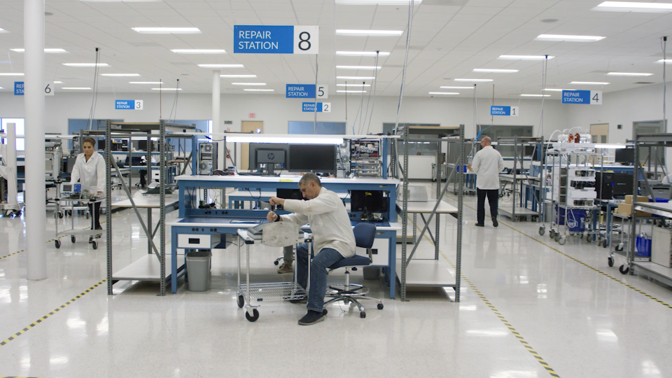
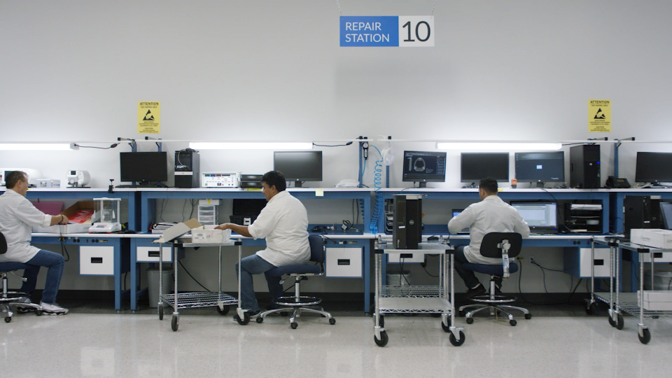
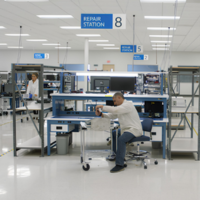
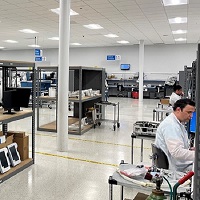
The depot repair process begins with the receipt of a device where decontamination is performed in a segregated area to avoid contamination. The device then transfers to the Service Repair Center (SRC) where a controlled diagnosis, repair, refurbishment, calibration, upgrade, testing, and documentation is performed. The process can include consigned warehousing and logistical transactions. For OEMs, the depot often becomes the central point where product reality shows up: repeat failures, part shortages, design weaknesses, unclear field notes, and customer pressure all arrive in the same queue.
A mature depot program does more than restore units. When repair data is captured consistently, it can reveal patterns across the installed base, including repeat failures, parts issues, unclear field notes, and product lifecycle challenges. That information can improve training, parts planning, field dispatch, warranty decisions, engineering updates, and end-of-life planning.

The three questions that define a scalable depot program
Every depot repair strategy should answer three questions:
- Can we see the work?
- Can we control the work?
- Can we learn from the work?
Visibility means the OEM has a clear way to understand where units are, what issues are causing delays, and what follow up is needed. Today, that visibility may come through reporting, status updates, or direct communication with the depot team, while future systems can make that information easier to access in real time. Control means the depot has defined procedures, trained technicians, approved parts, calibrated tools, validated testing, and clear acceptance criteria. Learning means repair data is captured in a way that can help OEM quality, manufacturing, engineering, and service teams identify trends over time.
A depot without visibility becomes difficult to manage. A depot without control becomes a quality risk. A depot without learning becomes an expensive loop.
The controlled depot workflow OEMs should build around
Quest frames depot repair around five controlled moments: receive, assess, repair, validate, and redeploy.
Receive means the returned unit, accessory, part, or assembly enters the process with the right RMA detail, serial information, condition notes, decontamination requirements, packaging checks, and customer context.
Assess means technicians screen the unit against OEM-approved diagnostic paths, not loose assumptions. Repair means the work is executed using the correct procedure, parts, tools, and technician authorization.
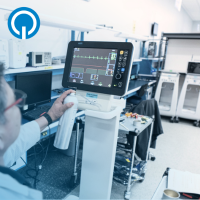
Validate means the device or assembly is tested against defined criteria before release.
Redeploy means the product is returned, stored, exchanged, or routed according to the service model with records that support the customer, the OEM, and the quality system.
| Program area | Healthy sign | Risk signal |
|---|---|---|
| RMA intake | Clear symptom, serial detail, accessories, condition, and customer priority captured before arrival | Depot receives units with vague complaint notes or missing context |
| Triage | Defined routing rules separate quick turns, complex repairs, no-fault-found review, and escalation cases | All repairs enter the same queue regardless of urgency or complexity |
| Repair execution | Technicians follow controlled work instructions with approved parts and documented results | Repair depends on informal knowledge or inconsistent notes |
| Validation | Testing and acceptance criteria are clear before the unit is released | Repeat failures or customer disputes increase after return |
| Visibility | OEM stakeholders can see status, exceptions, and aging cases without manual chasing | Customer care or sales must ask for one-off updates |
| Learning loop | Failure trends feed engineering, quality, field service, and parts planning | The same failure returns repeatedly without program change |
Where depot programs lose time and trust
Depot delay is rarely caused by one dramatic failure. More often, it comes from small gaps that accumulate: incomplete RMA detail, unclear customer complaint descriptions, missing accessories, parts waiting in another location, no defined triage rules, no-fault-found loops, test fixtures that do not match field realities, or unclear disposition rules for legacy units.
Each gap creates friction. The customer experiences it as silence, downtime, or repeat frustration. The OEM experiences it as margin pressure, escalation volume, or service backlog. The fix is not simply more technicians. The fix is a depot operating model that removes ambiguity before the unit arrives.
How Quest supports depot repair as an extension of the OEM
Most depot repair providers can fix the unit. Fewer can give the OEM the visibility, control, and learning loop described above, and almost none can connect depot execution to what is happening in the field, and very few can replicate and scale this globally.
That connection is where Quest is built differently. Quest operates depot repair as part of a service organization that also runs field service, warehousing and logistics, and customer care under the OEM's procedures. When a depot trend shows up (a repeat failure mode, a parts gap, a test that does not match field conditions) the same organization is in the field seeing the cause. The feedback loop is not a quarterly report. It is a daily operation.
For OEMs, that means depot repair stops being a black box at the end of the reverse logistics chain and becomes a source of intelligence about the installed base.
What should OEM service leaders do next?
If you are not sure where your depot program stands, start with a visibility check. Pull your open RMAs and sort them by what they are waiting on: parts, information, triage, test equipment, customer communication, or quality disposition. The distribution usually points to the first process change worth making, and it is a faster diagnostic than a full program audit.
Quest helps run this exercise with OEM service leaders as a structured review, typically a 60-minute working session followed by a written summary of the bottlenecks and the two or three changes most likely to move turnaround time.
Contact Quest International to compare notes on where field service, depot repair, warehousing/logistics, and customer care support could relieve pressure.
FAQ
What is depot repair for medical device OEMs?
Depot repair is the controlled process for receiving, diagnosing, repairing, refurbishing, validating, documenting, and returning devices or assemblies through a dedicated repair facility, rather than sending technicians into the field to perform the work on site.
Why is depot repair strategy important?
It affects turnaround time, customer communication, quality records, parts planning, warranty cost, field service efficiency, and lifecycle support.
What should OEMs look for in a depot repair partner?
Look for controlled procedures, technician training, quality documentation, parts and logistics capability, repair validation, program visibility, and the ability to operate as an extension of the OEM service team.
How does Quest support depot repair programs?
Quest supports screening and testing, preventive maintenance, calibration, repair, refurbishment, rework and ECO activity, warehousing and logistics, customer care coordination, and lifecycle support under OEM-defined service requirements.












Services
Contact
Copyright © • Quest International. All rights reserved. Quest International Terms. QuestNet Terms.