Medical Device Repair and Field Service Challenges OEMs Must Solve in 2027
A practical guide to aligning technician capacity, geographic coverage, and technical capability across the medical device service lifecycle.
Reading time: 6 minutes
Article Summary: Medical device repair and field service challenges are rarely caused by the repair alone. As an OEM’s installed base grows, downtime and service delays often result from gaps in technician capacity, geographic coverage, parts availability, device-specific training, documentation, or coordination between service teams.
As we wind down 2026 and approach 2027, OEMs should consider a service model that connects field service, depot repair, logistics, customer care, and quality processes. The goal is to maintain complete service records, meet regulatory and quality requirements, position qualified technicians and approved parts near demand, and respond effectively when service volume changes.
The strongest programs align capacity, coverage, and capability. When these areas work together, OEMs can reduce downtime, improve first-time fix performance, protect the customer experience, and turn individual service events into useful installed-base intelligence.
Inside This Guide
- Incomplete service data
- QMSR-ready service control
- Servicing vs. remanufacturing
- Parts shortages, obsolescence, and traceability
- Technician capacity and competency
- Geographic coverage and SLA performance
- Variable service demand
- Secure remote support
- Disconnected service operations
Medical device service problems rarely begin and end with the repair itself. Downtime often grows when an OEM’s installed base outpaces its technician capacity, geographic coverage, parts availability, or device-specific expertise.
For service leaders, the goal is simple: maximize uptime while protecting quality, documentation, and the customer experience. The strongest programs align three areas:
The challenges below are closely connected. A gap in one area, such as parts availability, technician training, or service documentation, can quickly affect uptime, SLA performance, customer experience, and the OEM’s ability to scale. Addressing them requires a coordinated service model that supports day-to-day repair execution and long-term operational visibility.
1. Incomplete Service Data
Every field visit, depot repair, technical-support case, and parts transaction should create a complete service record. Without reliable data, OEMs struggle to identify repeat failures, improve troubleshooting, or spot quality trends.
A useful record includes:
- Device and serial number
- Reported issue
- Confirmed failure code
- Work performed
- Parts used
- Software version
- Test results
- Field service technician qualifications
- Complaints or safety concerns
Track repeat repair rate, no-fault-found rate, service-record completeness, and escalation time. These metrics help distinguish a training issue from a parts, procedure, or product issue.
2. QMSR-Ready Service Control
The FDA’s Quality Management System Regulation (QMSR) became effective on February 2, 2026. For service operations, that means controlled procedures, traceable records, defined responsibilities, qualified personnel, and clear quality handoffs.
A service partner can complete work and maintain records under OEM-defined requirements, but the OEM remains responsible for governance. Before launch, confirm that the program has:
- Current, approved work instructions
- Technician training and competency records
- Controlled test equipment and tooling
- Device, part, and service-history traceability
- Defined complaint, deviation, nonconformance, and corrective and preventive action (CAPA) escalation
- Record-retention, audit-access, and data-transfer requirements
3. Servicing vs. Remanufacturing
Routine servicing returns a device to the OEM’s established safety, performance, and intended-use specifications. Remanufacturing may involve changes that go beyond routine servicing, such as changes to components, software, test methods, calibration values, performance, or intended use, and may create a different regulatory question.
Avoid ambiguity by defining approved parts, procedures, software versions, and acceptance tests for each repair level. Any substitution or process change should be reviewed through the OEM’s engineering and quality process before use.
4. Parts Shortages, Obsolescence, and Traceability
A qualified technician cannot complete a repair without the correct approved parts. Backorders, discontinued electronics, single-source suppliers, and aging equipment can all extend downtime.
A stronger parts strategy uses approved sourcing, traceability controls, central parts banking, regional forward stocking, technician trunk stock, reverse logistics, and obsolescence planning.
Key metrics include first-time parts availability, parts fill rate, backorder age, repeat dispatches caused by missing parts, repair yield, and excess or obsolete inventory.
5. Technician Capacity and Competency
Medical equipment repair is increasingly complex. Technicians may need expertise in electromechanical systems, networking, software, cybersecurity, calibration, and customer-site workflows.
The answer is not simply adding headcount. OEMs need a repeatable qualification path:
- Prerequisite skills
- OEM-approved training
- Supervised work
- Observed competency signoff
- Controlled procedures
- Ongoing and refresher training when products or processes change
Use product specialists for complex escalations and engineering feedback. Use cross-trained or supplemental resources for defined work after they are qualified to the OEM’s requirements.
6. Geographic Coverage and SLA Performance
A nationwide technician count does not prove that the right technician, part, and test equipment can reach a specific customer within the SLA.
Map the installed base by device location, density, criticality, entitlement, event rate, required skill level, and parts needs. This helps determine where to use dedicated technicians, shared or fractional regional resources, remote triage, or escalation specialists.
Review response time, on-site arrival time, SLA attainment, first-time fix rate, mean time to repair, travel time, and repeat dispatches by region and device family. National averages can hide the locations where service is falling behind.
7. Variable Service Demand
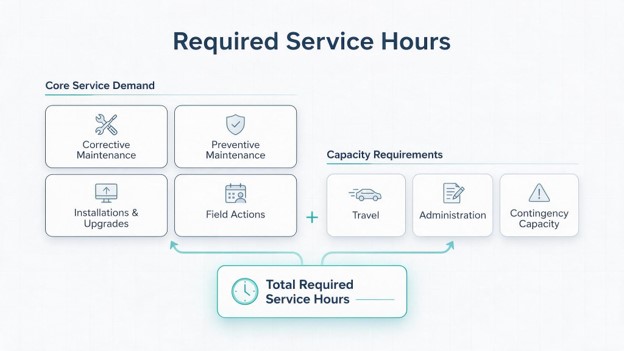
Service demand is rarely steady. Product launches, installation waves, warranty changes, preventive-maintenance cycles, field actions, new geographies, and acquisitions can create sudden peaks.
Start with the work required, then compare demand with productive hours by region and skill level. A flexible model may combine internal product specialists, cross-training, qualified supplemental technicians, depot exchange, remote triage, and staged ramp plans.
8. Secure Remote Support
Remote diagnostics can speed triage, identify the correct part before dispatch, and resolve approved software or configuration tasks. It cannot replace physical inspection, component replacement, calibration, or safety testing when hands-on work is required.
Use remote support only where device architecture, OEM procedures, cybersecurity controls, hospital policy, and the SLA allow it.
The workflow should include:
- Strong authentication
- Least-privilege access
- Encrypted connections
- Session logs
- Controlled change management
- A clear path to field dispatch
9. Disconnected Service Operations
A service event may move from customer care to technical support, logistics, field service or depot repair, quality review, and back to the customer. If these teams work in separate systems or with incomplete handoffs, delays and poor communication follow.
The challenge can become more pronounced when an OEM relies on multiple smaller regional vendors. Different providers may use different processes, systems, technician-training standards, reporting formats, and escalation paths. Without a consistent operating model, the OEM can lose visibility into service status, device history, parts movement, quality issues, and the customer experience across its installed base.
A one-stop post-sales service model can reduce that fragmentation by connecting customer care, technical support, field service, depot repair, parts logistics, reverse logistics, quality processes, and reporting through a coordinated service operation.
For OEMs, this creates a more consistent customer experience and a clearer view of the full product lifecycle—from installation and ongoing maintenance through repair, upgrades, field actions, returns, and end-of-life support.
Connect the customer case, device record, work order, technician, parts, return merchandise authorization (RMA), repair record, test results, shipment, complaint, and final disposition. This gives customers a consistent status and gives the OEM a usable view of installed-base performance.
KPIs That Matter
Use consistent definitions and segment results by device, region, contract, failure mode, and service channel.
| Outcome | KPIs |
|---|---|
| Customer continuity | First-time fix rate, mean time to repair, SLA attainment |
| Operational control | Backlog age, first-time parts availability, depot turnaround time |
| Quality and learning | Preventive-maintenance compliance, repeat repair rate, record completeness, escalation timeliness |
Cost per event and technician utilization matter, but should not be optimized at the expense of repeat repairs, documentation, or customer experience.
Choosing the Right Service Model
| Service Model | Best For |
|---|---|
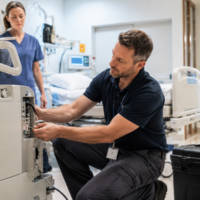
| Field service | Large or fixed equipment, urgent failures, installations, preventive maintenance, calibration, upgrades, and field actions |
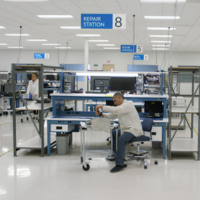
| Depot repair | Shippable devices, modules, accessories, exchange programs, and controlled component-level repair |
| Remote support | Triage, log review, approved configuration work, and dispatch preparation |
| Hybrid service | Distributed installed bases with mixed complexity and fluctuating demand |
Many OEMs benefit from a hybrid model: the OEM’s internal teams retain product expertise, complex escalation, and strategic customer relationships, while a qualified service partner adds scalable field execution, depot repair, logistics, and geographic coverage.
How Quest Supports OEMs
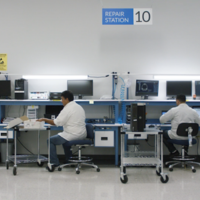
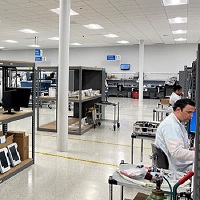
Quest International supports medical device and capital-equipment OEMs as an integrated service partner offering white-labeled field service, depot repair, warehousing and logistics, customer care, and field corrective-action support.
Programs operate under OEM-defined procedures and service-level agreements, with the aim of adding capacity and reach while preserving OEM control, quality, and brand experience.
Plan Your Service Operations for 2027
Talk with Quest about a service discovery assessment to explore how to scale your service operations more cost-effectively.
Together, we can map demand by region and work type, identify gaps in capacity, coverage, and technical capability, and build a practical plan to improve uptime, strengthen service consistency, and scale post-sales support across the full product lifecycle.
Contact Quest International to discuss a service discovery assessment.
Frequently Asked Questions
How can an OEM reduce medical device downtime?
Improve triage, place approved parts near likely demand, match technician skills to the work, define escalation paths, connect field and depot data, and monitor first-time fix rate, mean time to repair, repeat dispatches, parts availability, and backlog age.
Should an OEM outsource field service?
A hybrid model is often effective. Internal specialists can focus on product expertise, engineering feedback, complex issues, and strategic accounts, while a qualified service partner supports coverage, variable capacity, preventive maintenance, installations, upgrades, depot repair, and logistics under OEM requirements.
What should an OEM look for in a service partner?
Evaluate capacity, coverage, and capability. Review technician qualification, quality-system controls, calibrated equipment, parts traceability, service data, complaint escalation, cybersecurity, SLA reporting, geographic fit, and the ability to represent the OEM’s brand consistently.
MAR-XXX REV 1.0