
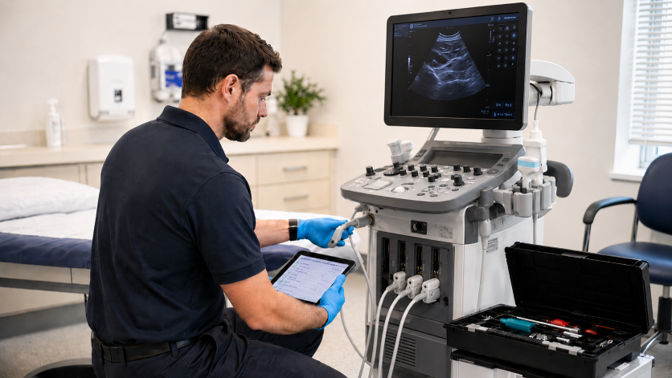
Preventive Maintenance Standardization for MedTech OEMs: Turn PM Into Controlled Service Execution
July 30, 2026
Reading time: 7 minutes
Article Summary: Preventive maintenance standardization for a medical device OEM means every PM event follows the correct OEM procedure, uses trained service resources, captures traceable documentation, and feeds performance data back into the service organization. The goal is not more calendar work. The goal is controlled execution, fewer avoidable escalations, stronger service consistency, and cleaner evidence when quality or customer teams ask what happened.
Why PM standardization feels simple until the install base grows
At launch, preventive maintenance is usually manageable. The install base is small, the service team knows the device history, and the same few people can still answer most questions from memory. Then the product is commercialized successfully, more units are deployed into spread geographies, service volume rises, and now OEM’s begin to struggle maintaining their growing install base without needing to significantly increase their headcount.
That is where PM adherence can break down. Not because anyone stopped caring, but because the work and geographic deployment has outgrown the infrastructure that used to hold it together without inflating overhead costs.
For MedTech OEMs, PM standardization should do three jobs at once: protect device performance, protect the customer experience, and protect the quality record. Miss any one of those three and the service organization starts paying for it later in corrective maintenance, escalations, rework, complaint handling, or lost confidence.
What does preventive maintenance standardization mean for an OEM?
Preventive maintenance standardization is the controlled alignment of PM procedures, schedules, training, parts, tools, documentation, and escalation workflows across every supported device and customer site. It is a service operating model, not a checklist project.
The most useful question is not, "Do we have a PM procedure?" Most OEMs do. The sharper question is, "Can a trained technician execute the same PM the same way, document it the same way, and escalate the same exceptions whether the device is serviced in the field, routed to depot, or supported through customer care?"
That is the difference between PM as a calendar task and PM as a controlled service process.
The three controls that make PM programs scalable
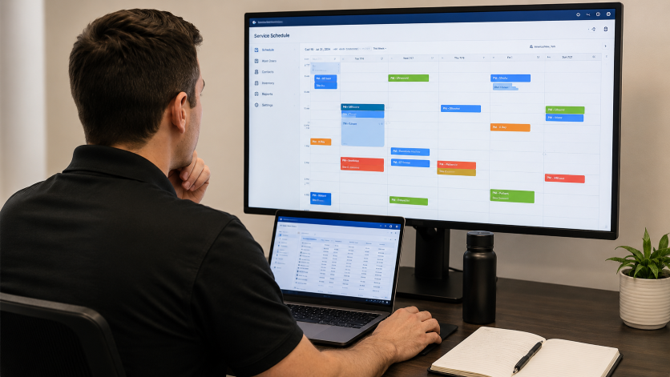
A scalable PM program depends on three controls: procedure control, capacity control, and evidence control.
- Procedure control means the technician has the current OEM-approved work instruction, correct revision, required tools, pass/fail criteria, and device-specific notes before work begins. If service bulletins, ECOs, firmware versions, or product updates change the procedure, the field and depot teams need a disciplined way to receive and apply those changes.
- Capacity control means the OEM can meet PM demand without starving corrective maintenance, install activity, or customer support. A service calendar that only works when nothing unexpected happens is not a service strategy. It is a fragile plan waiting for the first install ramp, field action, parts shortage, or technician vacancy to expose it.
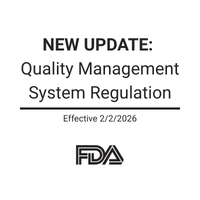
- Evidence control means the service record proves what was done, who did it, what tools or parts were used, what result was observed, and what happened next. Under the FDA Quality Management System Regulation, QMS expectations now align more closely with ISO 13485:2016. For OEM service leaders, that raises the importance of controlled documentation across post-market service activities.
Where OEM PM programs usually drift
PM drift usually starts quietly. The install base grows, service territories widen, and the same technicians expected to complete scheduled maintenance are also pulled into corrective repairs, escalations, installations, and other urgent service demands. A field technician captures a note in a local format. When bandwidth gets tight, PMs are often the first work to slide because break/fix activity takes priority.
The warning signs are familiar: overdue PMs, repeated rescheduling, corrective maintenance taking precedence over planned service, inconsistent work order detail, unclear ownership between field and depot, parts or tools not ready when the visit is due, and service teams constantly reshuffling the calendar to cover urgent calls.
When those symptoms appear, the answer is rarely to ask technicians to try harder. The higher-order fix is to build a PM system that makes the right action easier to execute and easier to verify.
A Quest-ready PM standardization framework
For OEM service organizations, Quest recommends building PM standardization around a practical operating sequence: define, train, stage, execute, document, and improve.
Define the work by device model, revision, install environment, service interval, and customer commitment. Train the people who will perform the work, including field technicians, depot technicians, customer care resources, and program managers who route exceptions. Stage the parts, tools, test equipment, forms, customer access requirements, and scheduling logic before the PM window opens.
Execute the PM under the OEM-defined procedure. Document the result in the required system of record. Improve the program by reviewing PM-to-CM patterns, repeat failures, parts usage, customer escalations, and technician feedback.
That last step is where many programs stop short. A PM that is completed but never analyzed is only an event. A PM that feeds service intelligence back into engineering, quality, logistics, depot repair, and customer care becomes a management system.
| Control area | What to verify | Why it matters |
|---|---|---|
| Procedure control | Current OEM work instruction, service bulletin status, required tools, pass/fail criteria, and model-specific notes | Supports consistent PM execution across technicians, devices, and service events |
| Capacity control | PM schedule coverage, technician availability, install and corrective maintenance workload, parts and tool readiness, and regional service coverage | Helps keep scheduled PM work on track when service demand shifts |
| Evidence control | Work order completeness, serial or lot traceability, test results, exception notes, closure requirements, and escalation documentation | Creates audit-ready evidence and improves service visibility |
How Quest supports PM execution without taking control away from the OEM
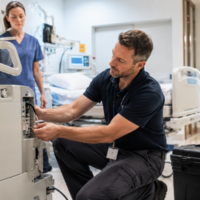
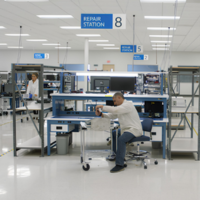
Quest International supports medical device and capital equipment OEMs as an extension of internal service organizations. The OEM keeps the procedure, quality expectations, and brand standard. Quest helps provide the execution capacity, trained resources, program coordination, depot repair capability, warehousing/logistics support, and customer care workflows that keep service moving.
That model is especially useful when PM demand collides with growth. A new product launch creates an install wave. A mature product creates recurring PM volume. A field corrective action consumes the same technicians needed for normal service. A legacy platform still has customers relying on uptime, but the internal team needs to focus elsewhere.
Quest helps OEMs absorb those service realities without creating a fragmented experience for the end customer. The objective is simple: one program, one standard, one customer experience.
What should OEM service leaders do next?
Start with a simple audit: choose one high-volume device family and compare the PM procedure, technician training record, parts kit, customer care handoff, depot feedback, and work order evidence across the last several service events.
If the process looks different by region, technician, customer, or service channel, the PM program may be relying on effort instead of control. Quest can help OEM teams close those gaps with field service execution, depot repair, warehousing/logistics, and customer care support aligned to the OEM service model.
If your service organization is being asked to scale faster without sacrificing quality, Contact Quest International to compare notes on where field service, depot repair, warehousing/logistics, and customer care support could relieve pressure.
FAQ
What is preventive maintenance standardization for medical device OEMs?
It is the controlled alignment of PM procedures, technician training, parts, tools, scheduling, documentation, and escalation workflows across the installed base.
Why does PM standardization matter for OEM service leaders?
It protects service consistency, creates stronger quality records, reduces avoidable escalation work, and helps the OEM scale service without changing the customer experience.
Should PM standardization include depot repair and customer care?
Yes. Depot findings and customer care signals often reveal patterns that field PM alone may miss. Those signals should feed back into PM planning, parts strategy, training, and quality review.
How can Quest help with PM standardization?
As part of Quest’s ISO Registrations and QMS (Quality Management System), Quest can implement and support all levels of field service execution, depot repair, warehousing/logistics, customer care, documented technician training, and program management under all of the OEM-defined service model and SOP’s.










Services
Contact
Copyright © • Quest International. All rights reserved. Quest International Terms. QuestNet Terms.