Designing Medical Devices for Serviceability: Supporting Service from Cradle to Grave
Design for serviceability brings field service, depot repair, logistics, customer care, and quality into the product conversation before support friction becomes a customer problem.
Reading time: 6 minutes
Article Summary: Design for serviceability means engineering a device so trained service teams can diagnose, access, repair, document, upgrade, and return it to use with minimal friction across the product lifecycle. For MedTech OEMs, the serviceability conversation should start before design freeze because every hidden fastener, inaccessible component, missing diagnostic signal, or unclear service BOM becomes a future service cost. From initial design through field service, depot repair, refurbishment, and end-of-life support, serviceability shapes how the device is supported across its full lifecycle.
Every device gets serviced eventually. Design for it.
A device can be clinically strong and still be painful to support. The problem often surfaces years after launch, when the installed base has grown, warranty volume has shifted into extended service, replacement parts have become harder to source, and customers expect faster answers than the original service model can deliver.
By then, service teams are working around design choices they did not make. A board is buried behind unnecessary teardown steps. A connector is easy to damage. A software update requires more field time than expected. A depot technician can repair the failure, but the documentation was never built for repeatable repair at scale.
Design for serviceability brings those downstream realities into the design conversation early, while the OEM can still change the product instead of asking service to compensate for it later.
What Is Design for Serviceability in Medical Devices?
Design for serviceability is the practice of building diagnostic access, repair access, parts planning, documentation, and lifecycle support into the device before the product reaches the field. It connects engineering decisions to the work field service, depot repair, logistics, customer care, quality, and technical support teams will perform for the next several years.
This is not a request for engineering to slow down innovation. It is a way to protect innovation after launch. The device has to work in the clinical environment, but it also has to be maintained in the real environment, where technicians have limited time, customers have limited patience, and every service event leaves a record.
FDA’s Quality Management System Regulation covers the methods, facilities, and controls used in the design, manufacture, packaging, labeling, storage, installation, and servicing of finished medical devices.1 Where servicing is specified, manufacturers must establish and maintain instructions and procedures for performing and verifying that service meets the stated requirements.2 Serviceability is therefore not just an operational preference; it supports a more controlled and repeatable lifecycle support model.

Three Service Questions Every Design Review Should Answer
Before design freeze, the OEM should be able to answer three service questions:
If the answer depends on tribal knowledge, excessive teardown, custom tools without a clear support plan, or judgment calls that are not captured in the service procedure, the service model is already carrying hidden risk.
Which Serviceability Decisions Compound Over Time?
Small design choices can become major service constraints. A serviceable access path reduces field time. A clear service BOM reduces parts confusion. A diagnostic routine improves first-call clarity. A sensible field-replaceable-unit, or FRU, strategy can prevent unnecessary depot returns. A labeled harness can keep a technician from guessing under pressure.
Those choices compound across hundreds or thousands of installed units. They influence mean time to repair, no-fault-found rates, repeat visits, spare-parts inventory, depot throughput, technical-support call length, and customer confidence in the OEM brand.
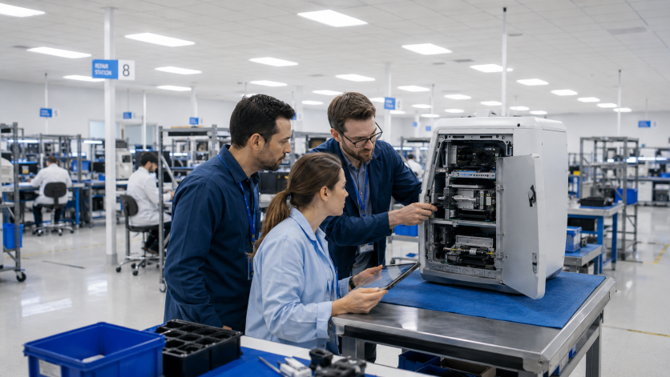
The best design reviews include people who have seen the device from the other side of launch: field engineers, depot repair leads, customer care, quality, logistics, and program management. They will see failure modes that may not appear in a design meeting but will appear at a customer site.
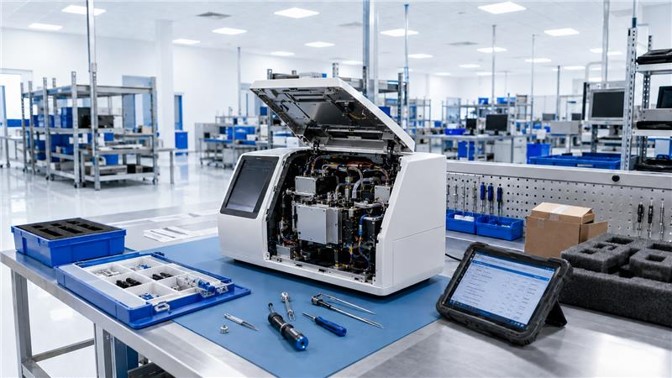
A Practical Quest Serviceability Lens
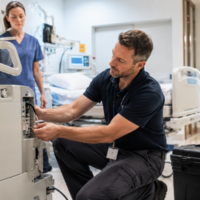
Quest looks at serviceability through the full support chain: field service, depot repair, warehousing and logistics, and customer care. That matters because a design decision rarely affects only one team.
In other words, serviceability is not a design checkbox. It is the bridge between the device an OEM launches and the service experience customers live with.
Serviceability Review Checklist for MedTech OEM Teams
| Design question | Service implication | Quest perspective |
|---|---|---|
| Can the likely failure points be reached without unnecessary teardown? | Affects MTTR, technician safety, and repeat service cost. | Field service access should be tested against realistic site conditions. |
| Are FRUs and service BOMs defined before launch? | Affects parts planning, stocking, repair routing, and customer communication. | FRU strategy should connect field, depot, and logistics workflows. |
| Does the device produce useful diagnostic data? | Affects dispatch quality, first-time-fix potential, and customer-care triage. | Customer-care and field teams need clear fault-isolation pathways. |
| Can the depot validate repair quality consistently? | Affects repeat failures, warranty cost, and quality documentation. | Test fixtures, procedures, and acceptance criteria should be ready before volume arrives. |
| Is documentation written for the person doing the work? | Affects training time, procedural drift, and audit readiness. | Service manuals should be task-based, revision-controlled, and easy to execute. |
How Can Quest Help Before and After Launch?
Quest International can support OEMs by reviewing service workflows, mapping likely field and depot repair paths, identifying parts and documentation gaps, and helping build a support model that protects the customer experience after launch.
For new platforms, that can mean serviceability input before full launch, product training support, field-execution planning, depot-repair readiness, spare-parts and logistics planning, and customer-care preparation.
For mature or legacy platforms, it can mean improving documentation, creating more efficient depot repair flows, building refurbishment programs, or supporting end-of-life service continuity. In the final phase of a product lifecycle, Quest can help OEMs identify and source hard-to-find components, evaluate replacement options for obsolete or expired BOM parts, manage remaining inventory, and build and communicate a practical support plan for customers still relying on the platform.
The best time to reduce service friction is before the first customer feels it. The second-best time is before the next generation of the same problem repeats.
What Should OEM Service Leaders Do Next?
Bring service into the design conversation before the product is locked. Ask field service, depot repair, logistics, customer care, and quality teams what would make the device easier to diagnose, repair, validate, and support over time.
Quest can help OEMs pressure-test serviceability assumptions before launch or improve support models for mature platforms already in the field.
Key Takeaways
If your service organization is being asked to scale faster without sacrificing quality, contact Quest International to compare notes on where field service, depot repair, warehousing and logistics, and customer-care support could relieve pressure.
Frequently Asked Questions
What is design for serviceability in medical devices?
It is the process of designing a device so it can be efficiently diagnosed, maintained, repaired, upgraded, validated, and documented throughout its service life.
When should OEMs start serviceability planning?
The earlier OEMs begin serviceability planning, the better. Starting before design freeze makes it far easier to address access, diagnostics, FRUs, service BOMs, and documentation before tooling and launch.
How does serviceability affect depot repair?
Serviceability determines whether depot teams can diagnose, repair, refurbish, validate, and return units efficiently without excessive teardown, parts confusion, or unclear acceptance criteria.
How can Quest support serviceability planning?
Quest can bring field service, depot repair, warehousing and logistics, customer care, and lifecycle-service perspective into new-platform launch planning or legacy product support.
Footer/References
[1] U.S. Food and Drug Administration, “Overview of Device Regulation.” This source explains that FDA’s Quality Management System Regulation includes requirements governing the methods, facilities, and controls used in the design, manufacture, packaging, labeling, storage, installation, and servicing of finished medical devices intended for human use.
[2] Medical Design & Outsourcing, “Design for quality: Right-to-repair and medical device service.” This source cites 21 CFR 820.200 and explains that, where servicing is a specified requirement, manufacturers must establish and maintain instructions and procedures to perform and verify servicing against stated requirements. It also identifies practical support elements such as service manuals, replacement-parts and tool information, software access where applicable, post-repair performance verification, and technician training.
[3] Quest International, “Why Is Designing for Serviceability Important?” This source supports the article’s definition of serviceability as designing for repair throughout a device’s lifetime, including service-parts planning, ease of part replacement, upgrade paths, field support, preventative maintenance, calibration, repair, and refurbishment.
MAR-XXX REV 1.0